The Six-Week Queue: What a Cobbler's Waiting List Reveals About the Way We Buy
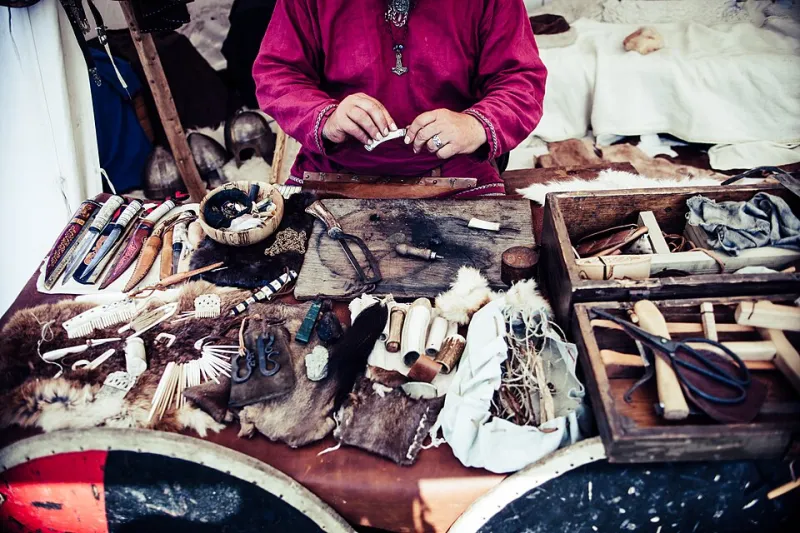
Photo: Clem Onojeghuo clemono2, CC0, via Wikimedia Commons
There is a workshop in Northampton — we shall leave it unnamed, as its proprietor would prefer — where the waiting list for leather repairs currently stands at six weeks. Six weeks to have a zip replaced, a lining stitched, a strap re-stitched by hand. Meanwhile, three streets away, a shop window advertises brand-new jackets at forty per cent off, and has done since October.
We find this contrast instructive. Not dispiriting, exactly — the queue is proof that someone still cares — but instructive. Because if you want to know the true state of Britain's leather trade, do not look at the sales figures. Look at the diary of the person who mends things.
The Queue as a Barometer
A waiting list is a peculiarly honest piece of economic data. Nobody queues for six weeks on a whim. They queue because the object at the end of it is worth the trouble — because the jacket has outlasted three high-street imitations and the bag has carried a decade of commuting and it would be madness, they have decided, to let a worn zip end it all.
The repairers who are booked solid are booked solid for a reason. They are good, first of all. But they are also busy because the demand exists: because a quiet, persistent segment of the British public has concluded that mending is the more rational act. These are the people our grandparents took for granted. They are back, and the diary proves it.
Conversely, the discounted rail tells its own story. A jacket marked down forty per cent was priced wrongly to begin with — priced as a transaction rather than as an heirloom. Nobody books six weeks in advance to save a garment that was never meant to last.
What the Menders Know That the Sellers Don't
Spend an hour in a repair workshop and you will learn more about leather than any boutique will tell you. The mender sees every failure mode: the seam that gave way because the thread was polyester rather than linen, the strap that cracked because the hide was over-corrected, the lining that shredded because nobody thought about friction when they chose it.
Ask a repairer which jackets come back to them and which are quietly abandoned, and you will get an education. The abandoned ones are almost always the cheap ones — not because they are unworthy of repair, but because the arithmetic never works. Nobody spends ninety pounds mending a jacket that cost a hundred and ten. The rescued ones are the well-made ones: the vegetable-tanned hide, the saddle-stitched seams, the hardware that can actually be replaced rather than merely mourned.
This is the quiet wisdom of the trade: the best leather is bought with its second decade in mind, not its first fortnight. The makers who design for repairability — replaceable zips, accessible linings, generous seam allowances — are the makers whose products fill the waiting lists rather than the skips.
Lessons From the Back of the Queue
What, then, should the prospective buyer take from all this? We would offer three observations.
First, buy from houses that expect to see the piece again. A manufacturer who offers a repair service, who names the tannery, who tells you the zip can be replaced — that is a maker who has thought beyond the till. The absence of such provisions is itself information.
Second, judge a purchase by its mending cost, not its sticker price. A well-made jacket that costs more upfront but can be resoled, re-lined and re-zipped for decades is, per year of wear, almost always the cheaper article. The arithmetic is unfashionable but unanswerable.
Third, book early. If the good repairers are six weeks out in October, they will be ten weeks out by December, when everyone's winter coat has failed at once. The queue rewards the organised. So, in its way, does good craftsmanship: the buyer who deliberates in September, as we have argued before, buys better than the one who panics in January.
A Waiting List Worth Joining
We do not romanticise the queue. Six weeks without your coat is a genuine inconvenience, and no one should pretend otherwise. But the queue is also a vote — a slow, patient, very British vote — for the idea that some things deserve keeping. Every name on that list is a small refusal of the disposable.
At England Leather, we take the waiting list as our compass. If our work cannot justify a place in a mender's diary, we have not made it properly. And if you are weighing a purchase now, ask yourself one question before the card comes out: when this needs attention in ten years, will anyone be able to help me — or will I be standing outside a shuttered workshop, holding a jacket nobody can save?
The answer, more often than the industry would like to admit, is decided at the moment of purchase.