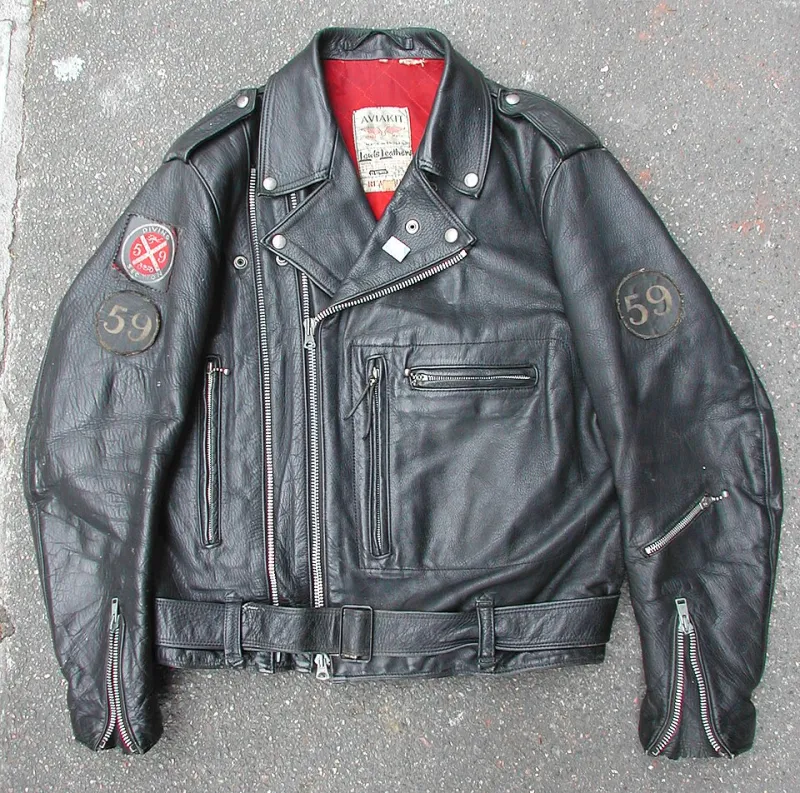
The Discount Rail Is a Confession: Reading the Truth Behind a Marked-Down Belt
Photo: Uncredited illustrator. Issued by the Nazi Party and published by Franz Eher Nachfolger in Munich, Germany, 1937. The publishing house and organization were disbanded in 1945. No known copyright restrictions., Public domain, via Wikimedia Commons
There is a particular silence in an auction room just before a lot of leather goods comes up. The auctioneer pauses, the catalogue price estimate is read out, and seasoned buyers fold their arms. They know something the newcomers do not: leather rarely ends up on a discount rail without reason. The market, like the material itself, keeps an honest record.
Why Good Leather Seldom Needs a Sale
A properly made belt, bag or jacket — full-grain hide, solid brass hardware, stitching worked by hand — holds its value because the making of it was never cheap in the first place. Tanneries in Staffordshire, Northamptonshire and the Scottish Borders do not produce surplus quality. What they produce is expensive, and the houses that buy from them price accordingly.
So when you see a leather belt reduced by seventy per cent in a January sale, the sensible question is not what a bargain but why. Sometimes the answer is innocent: a discontinued colourway, a cancelled commission, a retailer clearing a warehouse. Sometimes the answer is stitched into the lining — corrected grain disguised under heavy pigment, bonded leather offcuts pressed to look like a whole hide, a buckle that will rust by the second winter.
The discount rail is, in its way, a confession. Your task is to decide whether it is confessing a surplus or a shortcoming.
The Auction Room as a Truth Serum
British auction houses are wonderfully unsentimental places. There is no shop lighting, no scented candle, no assistant telling you the belt has "character". There is a viewing morning, a condition report, and the accumulated scepticism of a room full of dealers who have been fooled before.
Go to one, even if you never bid. Handle the lots. You will quickly learn the difference between leather that has aged and leather that has failed. A belt that has darkened at the buckle hole and softened along its length may be beautifully tanned stuff merely worn honest. A belt that has cracked across the strap in a spider's web of fine splits was never good leather at all — it was heavily finished hide that could not survive its first decade, and the auction estimate reflects that.
The room knew. The estimate knew. The question is whether you did.
How to Tell a Genuine Bargain from a Disguised Devaluation
Not every markdown is a trap. Discontinued lines from reputable makers, cancelled bespoke orders and end-of-season stock from houses you already trust can all be genuine opportunities. The distinction lies in what you can verify.
Ask what the full price was, and who set it. A bargain is a reduction from a price a maker could honestly command. A disguised devaluation is a discount from an inflated anchor price invented for the sale sign.
Read the edge, not the face. Turn the belt over and inspect the cut edge and the back, or flesh side. Full-grain leather shows a fibrous, slightly rough underside. Bonded or split leather shows a uniform, papery surface, often painted to match the face.
Bend it. Good leather folds into a soft, rolling curve and recovers. Poor leather creases sharply, and if the crease shows a pale line or fine cracking through the pigment, walk away. That crack will become a break within two winters of British weather.
Smell it. This is not romanticism. Vegetable-tanned leather has a warm, woody scent. Heavily finished or chemically treated goods smell of little, or of nothing you would want near your wardrobe.
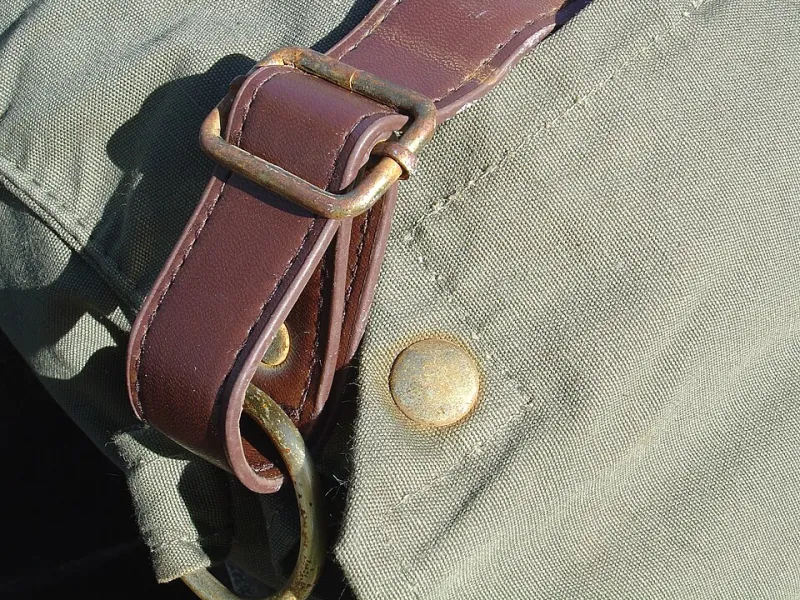
Interrogate the hardware. A maker who spends on the hide spends on the buckle. Zinc alloy stamped to imitate brass is the telltale companion of poor leather.
The Price Nobody Wanted to Pay
There is a school of thought that says a bargain is only a bargain if you wanted the thing at full price. We would go further: a leather good is only a bargain if it would have been worth full price. A cracked belt at eighty per cent off is not a saving; it is the market's way of telling you what the object was always worth, which in this case is very little, and possibly less than nothing once you account for the disappointment.
Our grandparents understood this instinctively. They bought leather rarely and deliberately — a belt at twenty-one, boots when the old pair was resoled beyond saving, a bag for a working life. They did not shop the sales, because the things worth owning were seldom on them.
The next time a reduced rail or an auction lot tempts you, take the object to a window, bend the strap, read the edge, and ask the room's silent question: why was this not wanted? If the answer is a discontinued shade or a cancelled order, buy with confidence. If the answer is a crack running through the grain, let the discount be someone else's lesson.