Spilt Bitter and Second Chances: In Defence of the Genuine Pub Jacket
Photo: George Eastman House, No restrictions, via Wikimedia Commons
There is a particular kind of leather jacket sold in this country that has never once been rained on. It hangs in boutique windows under careful lighting, supple and spotless, priced as though it were made of regret. It is, we would argue, barely a jacket at all. It is a costume awaiting an occasion that will never come.
The jacket that matters — the one worth buying — is the one that gets worn. And in Britain, the place a jacket is most honestly worn is the pub.
The Beer Garden Is the Ultimate Testing Ground
Consider what we ask of a coat on an ordinary Friday. A draughty smoking area in February. A bench that has not dried since October. A shoulder brushed against a doorway, a half-pint of premium lager deposited down the sleeve by an over-enthusastic friend, the long walk to the chip shop under a sky that cannot make up its mind.
No showroom replicates any of this. Yet these are precisely the conditions a British jacket must endure if it is to be anything more than decoration. The pub — the terrace, the beer garden, the snug — is where a coat reveals whether its tanning was honest, its stitching sound, its hardware up to the job.
A jacket that survives five years of Friday nights has passed a more rigorous examination than any laboratory could devise.
Weight Is Not a Suggestion
If you intend to buy one jacket and wear it everywhere, start with weight. We mean this plainly: choose a hide with substance. A full-weight steer hide, somewhere around 1.2 to 1.4 millimetres, will shrug off a spilled bitter that would stain a featherweight lambskin beyond redemption.
Lightness is seductive in the shop and useless in the field. The thin, soft leathers that drape beautifully over a hanger are the same ones that scuff on brick walls, soak through in a drizzle and thin at the elbows within three winters. Heavier leather stiffens the purchase, yes — but it breaks in rather than breaks down. Within a season it moulds to your shoulders like it was drawn on.
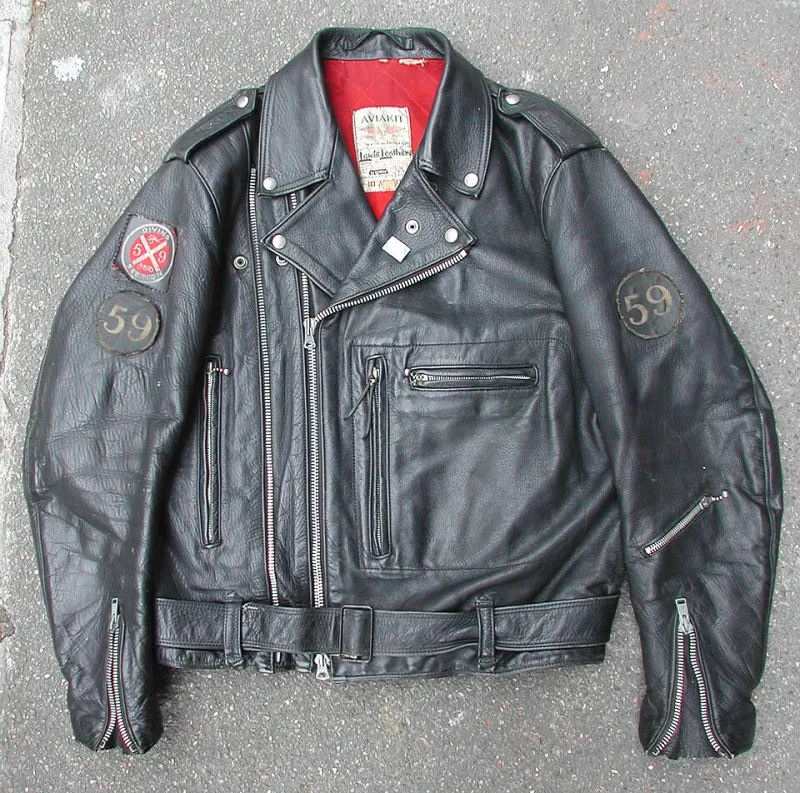
The classic British workwear tradition — the half-belt, the blouson, the humble sports jacket cut in horsehide or heavy steer — was never designed for posing. It was designed for men who wore one coat until it fell apart, then had it mended and carried on.
Finish and Hardware: Choose for the Rain, Not the Camera
Finish matters as much as weight. A heavily pigmented or aniline-dyed hide with a waxed or oiled surface will repel a light shower and forgive a scuff; a pale, naked suede will remember every puddle splash until the end of time. For pub wear, we would steer you firmly toward the former.
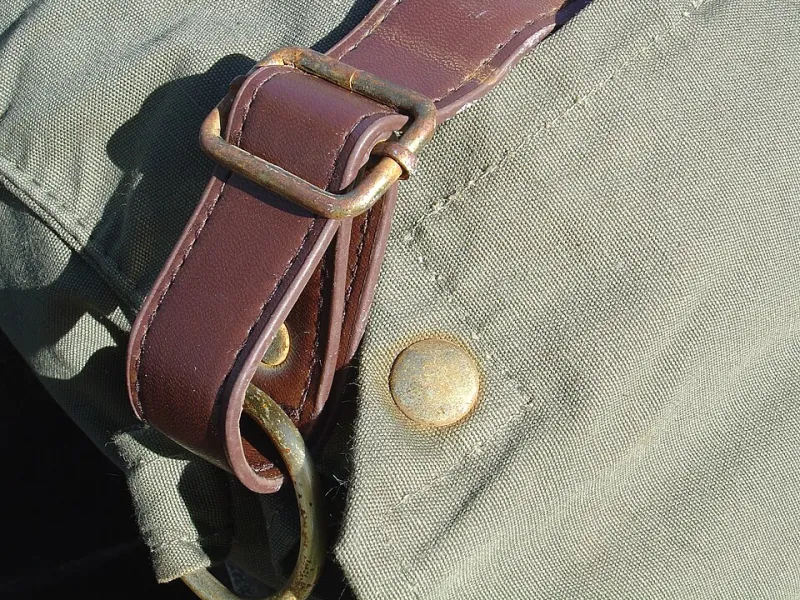
Hardware deserves the same scepticism. Brass zips and studs that tarnish gracefully are your friend; plated hardware that pits and flakes after a wet winter is not. A zip that jams the first time a droplet finds it is a zip that will fail on the night you need it least. Pull the zipper in the shop. Do it ten times. A quality runner glides with a satisfying weight — anything less, walk away.
And look at the cuffs and collar, where beer, rain and sunscreen collect. Stitched and turned edges age; glued edges peel. It is a small detail that separates a jacket built for decades from one built for a season.
One Jacket, Worn Honestly
There is a fashion for owning many jackets, each suited to a narrow occasion. We understand the appeal and dissent from it. A wardrobe of compromises produces none worth keeping. One proper jacket, worn to the match, the wedding do, the funeral do and the last train home, will outserve a rail of lesser coats and cost you less over twenty years.
Such a jacket should be a little plain. Black or a deep tan, a cut that works over a jumper or a shirt, no styling so distinctive that it dates. The character should come from the leather itself — the grain, the creases at the elbows, the patina at the cuff where a thousand pints have rested.
Let It Earn Its Scars
A final word on maintenance, because a pub jacket still deserves care. Wipe spills promptly with a damp cloth, condition the leather twice a year, and let it dry naturally after a soaking — never on a radiator, however tempting after a cold walk home. Treat it as you would treat a good pair of boots, and it will repay you with decades of service.
The finest compliment a British leather jacket can receive is not admiration in a shop window. It is being grabbed off the hook without thinking, on the way out into the rain, for the tenth year running. Buy for that. Everything else is decoration.