Charity Shop Gold: How to Judge Vintage Leather Before You Commit
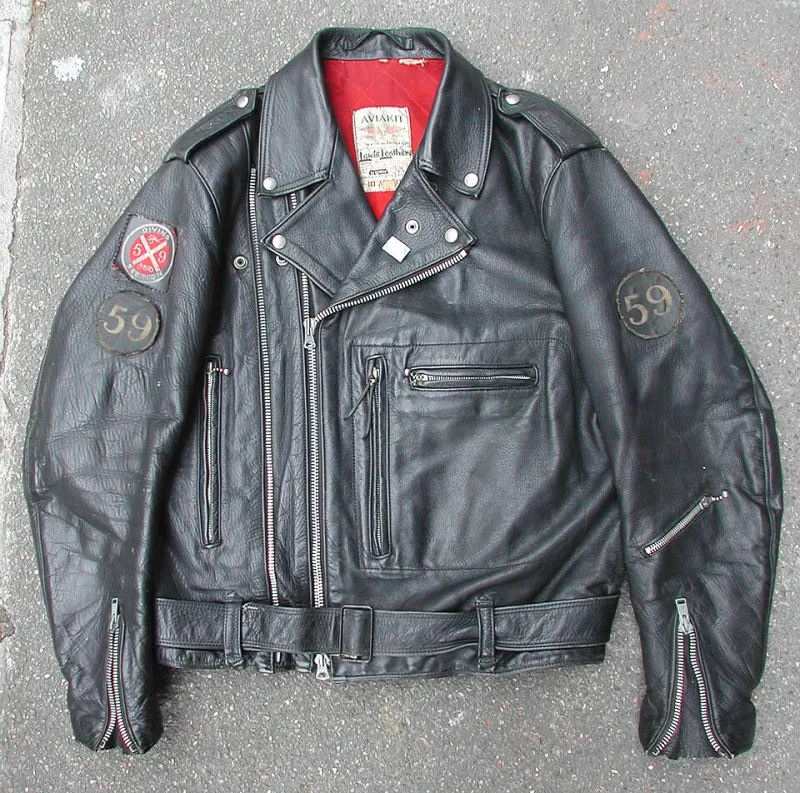
Photo: Timken Bearing, CC BY-SA 3.0, via Wikimedia Commons
The rail at a British charity shop rarely announces its treasures. Between the fast-fashion cast-offs, there is sometimes a leather jacket with a lining frayed at the collar, or a satchel with buckles gone green at the edges, priced at less than the cost of a round of drinks. The question is never whether good leather turns up second-hand — it does, constantly. The question is whether you can tell, in the three minutes you have before someone else's hand reaches the same rail.
Start With the Nose
Leather is honest, and its smell tells you more than any label. A well-kept vintage piece carries a warm, faintly sweet scent — the lingering character of the tannery. Mustiness, by contrast, signals damp storage and possible mould deep in the fibres. A brief airing in the open air may cure mild mustiness, but a sour, chemical or rotting odour usually means the hide has begun to break down. No conditioner reverses that.
Run a thumb along the surface. Vegetable-tanned British leather from the postwar decades often feels dry but intact; that dryness is treatable. Flaking, cracking that lifts away in tiny particles, or a surface that feels papery rather than supple, indicates a hide that has lost its oils beyond recovery.
Patina, or Damage in Disguise?
The word patina is used generously in vintage listings, so it pays to be strict. Genuine patina is an evening of colour, a softening of sheen, a darkening at the handles and cuffs where hands have rested. It is the record of use, and it is what makes a 1970s biker jacket or an old school satchel desirable.
Damage is different, and it hides in predictable places. Check the points where leather folds most:
- Elbows and cuffs on jackets, where flexing cracks the finish
- Corners on bags and satchels, where wear exposes raw hide
- The base of any bag, which takes the weight of every decade
- Under the arms of jackets, where sweat and friction quietly do their work
Surface scuffs can be cleaned and fed back to health. Cracks that open when you flex the leather — revealing a lighter colour beneath — are structural, and they will spread.
The Stitching and Hardware Audit
British-made vintage leather was usually assembled to be repaired, which is precisely why it survives. Turn the piece over. On a jacket, inspect the seams at the shoulders and the join between sleeve and body; on a satchel, look where the strap meets the flap, the point of greatest strain.
Even, tight stitching in waxed thread is a fine sign. A few broken stitches are a weekend's work with a curved needle. But thread that has rotted throughout, or leather around the stitching that has torn — holes elongating rather than holding — suggests the hide itself has weakened.
Hardware deserves its own minute. Solid brass buckles and zips, even tarnished, can be cleaned to glory; a stiff zip is often only grit, worked free with graphite or a specialist zip cleaner. Beware zips that separate under gentle tension, as replacements on vintage jackets can be costly if the original tape has perished. On bags, check that the buckle tongues still bite and that rivets hold firm rather than spinning in their holes.
Which British-Era Pieces Are Worth Restoring
Not every find deserves the investment, but certain categories have earned their reputation. The British-made biker jackets of the 1970s — often heavyweight cowhide, generously cut, built for a lifetime — reward restoration handsomely, and good examples are increasingly collectable. Postwar school satchels and briefcases, frequently vegetable-tanned in the Midlands, respond beautifully to a clean, feed and new strap if needed. Older travelling trunks and holdalls, with their brass fittings and riveted corners, can be brought back with surprisingly little work.
The common thread is construction quality. If the piece was built to be repaired — real linings, replaceable hardware, stitched rather than glued edges — restoration is usually worthwhile. Bonded leather and glued construction were never meant to last and cannot be made to.
A Restoration Cost Checklist
Before you hand over your money, price the rescue honestly:
- Professional clean and recondition — £40–£80 for a jacket, less for a bag
- Lining repair or replacement — £60–£150 depending on extent
- Zip replacement — £50–£100 on a heavy vintage jacket
- Restitching of seams or strap points — £20–£60 per area
- Colour and finish revival — £30–£70 where scuffing is significant
If the asking price plus the realistic total of that list lands below the cost of an equivalent new piece of comparable quality, you have found something worth buying. If the repairs exceed it, walk away — however charming the patina.
When to Walk Away
There is no shame in leaving a piece behind. Mould that returns after cleaning, leather stiff as board with cracks through the grain, linings past saving, and structural tears at stress points are the marks of a garment at the end of its road. Some leather has already given its decades to someone else.
But when the hide is sound, the stitching holds and the hardware only needs a polish, you are not buying an old jacket or a tired bag. You are adopting a piece of British craft that has outlasted its first owner's years — and, with a little care, will outlast yours too.