Turn It Inside Out: The Hidden Truths Stitched Into a Jacket's Lining
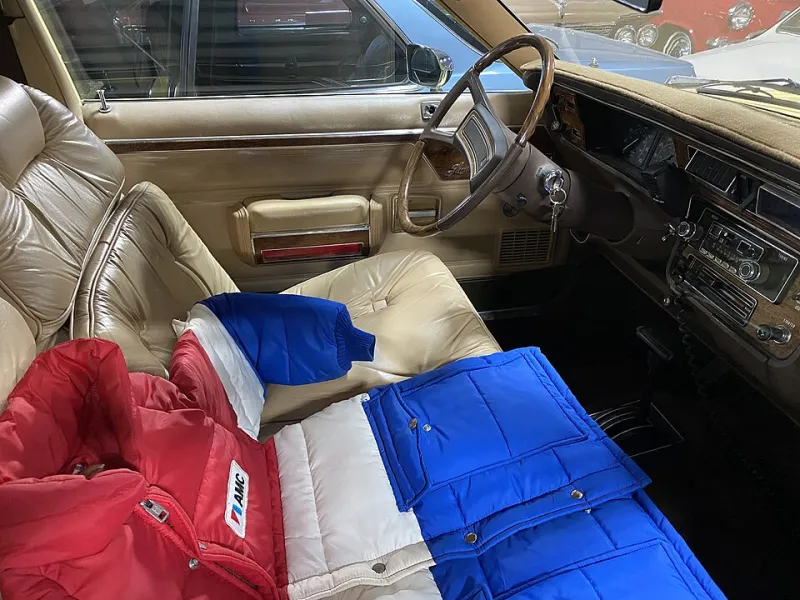
Photo: CZmarlin — Christopher Ziemnowicz, a photo credit would be appreciated if this image is used anywhere other than Wikipedia. Please also include the location of the image: the Rambler Ranch collection in Elizabeth, Colorado. See: https://www.ramble
Why the Outside Lies and the Inside Doesn't
Any leather jacket can be made to look convincing on a rail under boutique lighting. Grain can be embossed, edges can be painted, and a well-cut silhouette flatters almost every hide. What cannot be faked so easily is what you find when you open the front and look within. The interior of a jacket is where a maker's priorities become impossible to hide, because nobody expects the inside to be photographed.
At England Leather, we have long held that a jacket should be as honest on the reverse as it is on the face. Our grandmothers judged cloth by rubbing it between the fingers and our grandfathers turned a coat cuff to check the seam allowances. That instinct has not lost its value. If anything, in an age of fast fashion and fleeting construction, it has never mattered more.
The Pocket Test: Small Details, Large Consequences
Begin with the pockets, because they are the parts of a jacket that work hardest. A pocket on a leather jacket endures thousands of insertions a year — keys, gloves, train tickets, the inevitable loose change. The pocket bag, the pouch of fabric hidden behind the leather, is where budget garments reveal themselves first.
Run your fingers inside. A quality pocket bag will be cut from cotton twill, fine poplin, or a sturdy barathea — fabrics chosen because they resist abrasion and, crucially, do not snag. Cheap jackets use thin synthetic linings that pill within a season and tear at the corners where the stitching turns. Note also whether the pocket bag is attached with a bartack, that dense cluster of stitches reinforcing a point of stress, or with a hurried straight seam that will unravel the first time you carry a set of house keys.
The pocket openings deserve equal scrutiny. On a properly made jacket, the welt — the leather strip forming the pocket mouth — will be cut on the grain, edge-stitched by hand or machine with even, regular tension, and backed with stay tape to prevent stretching. On a poor jacket, the welt will ripple, the leather edge will be raw, and within two winters the opening will gape like a tired smile.
Seam Tape, Spare Buttons and Other Quiet Confessions
Once the pockets have been assessed, work outward. Look at how the lining meets the leather at the hem and cuffs. Quality makers bind these junctions with cotton or rayon seam tape, which stabilises the join and stops the lining from twisting — the reason a cheap jacket's sleeve lining always seems to bunch into a knot at the wrist.
Check whether spare buttons or a swatch of leather are sewn into an interior pocket. This small courtesy, inherited from tailoring tradition, signals a maker who expects the garment to be repaired rather than replaced. Similarly, examine the interior stitching itself: on a good jacket, the stitches per inch will be high and the thread will be a bonded polyester or heavy cotton, chosen to outlast the leather it holds together. On a poor one, the thread is a thin filament that snaps under tension and takes the seam with it.
Even the hanging loop tells a tale. A leather-bound loop, securely anchored into the back panel seam, assumes the jacket will spend decades on a wooden hanger. A ribbon loop tacked into the lining assumes nothing of the sort.
A Buyer's Inspection Checklist
Before your next purchase, take two unhurried minutes with the jacket inside out:
- Pocket bags: natural fibre, tightly woven, bartacked at stress points
- Welts and flaps: grain-cut leather, taped, with clean edge stitching
- Lining junctions: bound with seam tape at hem and cuffs, no raw edges
- Thread: bonded and substantial, with consistent stitch density
- Spares: buttons or a leather swatch tucked away somewhere thoughtful
- Anchoring: lining attached to the leather at set points so it cannot twist
None of these details costs a maker a great deal of money individually. What they cost is time, and time is precisely what distinguishes craft from manufacture.
The Hours Nobody Sees
A leather jacket might carry forty or more hours of work in total, and a meaningful proportion of that labour is spent on parts no one will ever see. This is the quiet arithmetic of British craftsmanship: strength where it cannot be admired, finishing where it cannot be judged. The tanneries of the Midlands and the small workshops that still line certain streets of Northampton and Leeds understood this generations ago, and the best of their successors understand it still.
So next time you are considering a jacket, turn it inside out in the shop. A confident maker will not mind — indeed, they will likely join you. What you find in those hidden seams is not merely construction. It is a statement of intent, stitched where only you and the garment will ever know.