Follow the Hide Backwards: Tracing One British Jacket From Boutique Shelf to Farm Gate
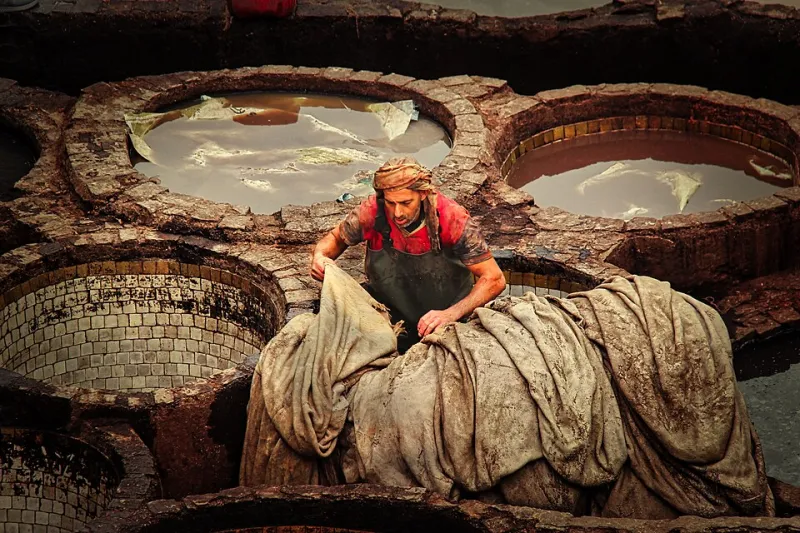
Photo: Amine boussiar, CC BY-SA 4.0, via Wikimedia Commons
On a rail in a London boutique hangs a jacket. Full-grain hide, vegetable tanned, cut and sewn in England, ticketed at a price that reflects every honest hand that touched it. Most shoppers will pick it up, admire the feel of it, and try it on. Very few will ask the only question that truly matters in 2025: where, precisely, did this begin?
We decided to find out — to take one British-made jacket and follow its supply chain in reverse, from the shop floor back to the field. What follows is a composite account, drawn from the standard structure of the British leather trade, and it is more complicated, and more interesting, than most branding would have you believe.
Stop One: The Boutique
The journey backwards begins with a label. 'Made in England' tells you where the jacket was cut and stitched — in this case, a small workshop in the East Midlands, an area that has dressed the country in leather since the days when Northampton made boots for the trenches. The maker confirms the hides came from a single UK tannery, and supplies the tannery's name. Already, we are further than most brands ever take a curious customer.
Stop Two: The Tannery
The tannery in question sits in the Midlands, one of a handful of British tanneries still operating at a serious commercial scale. Here the raw hides — arriving salted, in chilled consignments — are soaked, limed, tanned, dyed and finished. The tannery's records are the backbone of any genuine traceability claim: lot numbers, delivery dates, origin declarations.
Ask a brand whether their tannery can produce a hide's origin documentation. If the answer is a shrug, you have learned something. This tannery's answer is a ledger. It shows the hides came through a British hide broker, and before that, from two sources: UK abattoirs supplying home-grown hides, and a European auction system for hides sourced on the Continent.
Stop Three: The Broker and the Market
The hide broker is the least glamorous and most overlooked figure in the chain — the intermediary who grades, salts, ships and sells raw hides between abattoir and tannery. British hides from cattle reared for the beef and dairy trade pass through auction marts and abattoirs from Aberdeenshire to Devon, are graded for size and defect, and are sold on to tanning.
It is worth stating plainly: no animal is reared for its hide. Leather is a co-product of the meat and dairy industries, and a British jacket's raw material is, in the truest sense, a by-product of the nation's dinner. This is not a compromise — it is arguably the strongest sustainability argument the material possesses.
Stop Four: The Farm Gate
The final link is the least documented. Cattle are raised on pasture across the country — upland hill farms in Wales and Cumbria, lowland dairy herds in Somerset and Cheshire. Traceability to individual farms is rare, and honest brands do not pretend otherwise. What a good tannery can typically certify is country of origin and, increasingly, welfare and deforestation-free sourcing standards for imported hides.
Why Traceability Is the New Luxury
For decades, luxury was signalled by logo and price. That consensus is fraying. The modern British shopper — armed, sceptical and allergic to greenwash — is learning to ask sharper questions, and 'heritage' without evidence has begun to sound hollow.
Five Questions Worth Asking Before You Buy
- Where were the hides tanned? A named tannery, in Britain or Europe, is a sign of accountability. 'Imported leather' is not an answer.
- Can the tannery trace the hide to origin? Even partial traceability — country, system, broker — separates serious makers from assembly operations.
- Where was the garment cut and sewn? 'Designed in London' and 'made in England' are different claims. Ask which applies.
- Is the leather a by-product? If a brand implies animals are raised for skins, treat it as a warning about everything else they tell you.
- Who repairs it? A jacket built to last generations should come with a name to send it back to.
The Jacket, Reconsidered
Follow the chain all the way back and the jacket on that boutique rail is revealed as a collaboration between perhaps a dozen unseen contributors: farmer, haulier, abattoir, broker, tannery, tannery worker, cutter, sewer, finisher, retailer. No single one of them is romantic on their own. Together, they constitute something genuinely rare — a short, legible, largely domestic supply chain in an industry that has spent thirty years hiding its own.
Traceability, in the end, is not a marketing exercise. It is simply the modern form of the oldest promise in this trade: that a thing is what it says it is. The brands that can prove it deserve your money. The ones that cannot deserve your questions.