One Wardrobe, One Philosophy: Curating Leather That Works Together
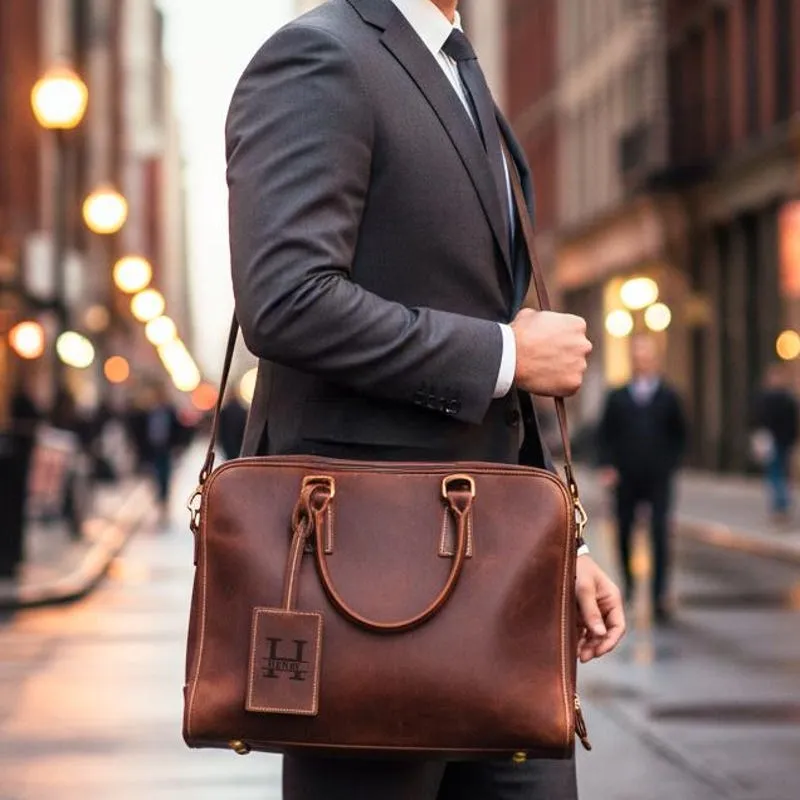
Photo: gentleman leather briefcase belt boots flat lay brown tones, via i.etsystatic.com
There is a particular pleasure in opening a wardrobe and finding that everything within it agrees with everything else. No clashing hardware, no competing shades of brown, no belt that belongs to another life entirely. This is not an accident of wealth; it is the result of restraint. And nowhere is restraint more rewarding than in leather.
The idea of a capsule wardrobe has been much discussed in recent years, usually with reference to knitwear and shirting. But leather deserves its own discipline. A jacket, a bag, a pair of boots and a belt — four pieces, perhaps five — will outlast every trend cycle you will ever witness, provided they are chosen to speak the same language.
Begin With the Anchor
Every considered leather collection has one anchor piece: the item around which the others orbit. For some, it is a briefcase carried daily into the office. For others, a mid-brown holdall or a black calf Derby boot. The anchor should be the piece you use most often and would replace last.
Choose it in a colour you can live with. Chestnut, conker and dark tan are the great workhorses of British leather — they sit comfortably alongside grey flannel, navy worsted and denim alike. Black is impeccable but less forgiving; it pairs beautifully with formal dress and poorly with weekend tweed. If your life divides neatly between the two, you may eventually require both — but not at once.
Hardware: The Detail That Betrays a Careless Collection
Nothing undermines a leather wardrobe faster than mismatched metalwork. A brass-buckled belt worn with a silver-zipped jacket reads as thoughtless, even if neither piece is at fault.
Decide early whether your collection will be brass or silver-toned. Brass — warm, slightly antique, inclined to patinate — suits the rustic English tradition: waxed cotton, tweed, brogues. Nickel and silver tones lean sharper and more urban. Neither is superior; the error is mixing them. When buying, turn the piece over and look at the buckles, the zips, the rivets. A maker who has considered these details has usually considered everything else too.
Matching Without Matching
The old rule — that shoes, belt and bag must match exactly — is honoured more in the breach than the observance by well-dressed British men today. Exact matching can look uniform-like. What matters is tonal harmony: a dark oak belt with a chestnut briefcase, a conker boot beside a tan holdall. Keep all leathers within two or three shades of one another and the eye reads the ensemble as deliberate.
Texture deserves equal attention. A full-grain vegetable-tanned briefcase will develop a burnished, slightly uneven character over the years; a heavily corrected leather will remain flatter. If most of your collection is full-grain, keep it that way. Pieces that age at the same pace grow old together gracefully.
Buy Fewer, Better — and Then Stop
The arithmetic of quality is simple and unforgiving. A £60 belt replaced every two years costs more over a decade than a £180 English bridle-leather belt that will see thirty. The same logic applies across the wardrobe. The initial outlay is higher; the lifetime cost is dramatically lower.
But the discipline matters as much as the money. A capsule works because it is closed. Every new piece must answer a question: does this harmonise with what I already own? If the answer is no — however beautiful the object — it does not belong. This is how a wardrobe remains a wardrobe rather than becoming a museum of impulse.
Caring for a Cohesive Collection
A curated set of leather is easier to maintain precisely because it is curated. You learn the temperament of two or three leathers rather than a dozen. Feed the belts and boots with a good cream twice a year; allow the briefcase to dry naturally after a wet commute across the Pennines or a soggy platform in Manchester. Rotate wear where you can — leather, like its owner, benefits from a day of rest.
The Longer View
There is something quietly radical about owning less and keeping it longer. A gentleman who has worn the same conker briefcase to work for twenty years has made a statement no logo could make. The leather has recorded his working life in scuffs and burnishing; the brass has darkened to match his belt buckle bought a decade later to harmonise with it.
That is the promise of the one-bag leather wardrobe: not a limitation, but a coherence. Four or five pieces, chosen once, chosen well, worn for generations. It is the most English approach to dress we know — and the one we would happily defend over a pint in any county.