Fourteen Days for a Reply: The Lost Courtesy of Writing to a Leather House
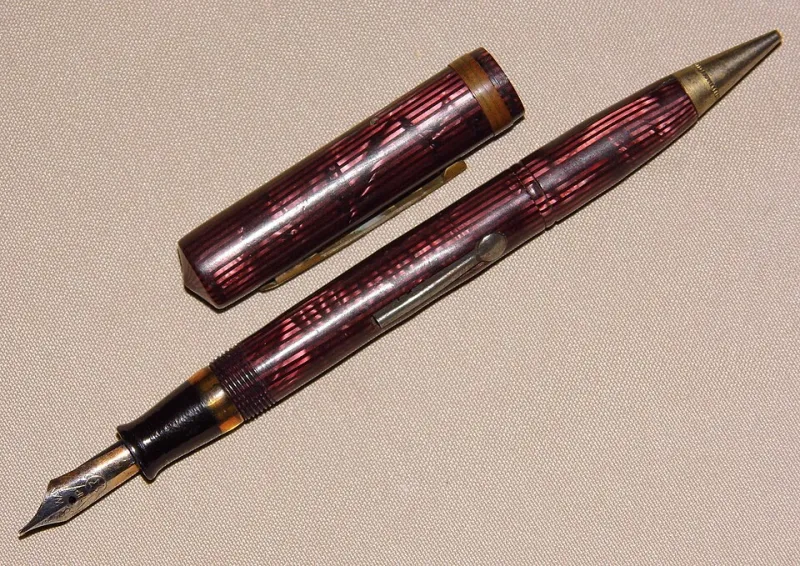
Photo: Joe Haupt from USA, CC BY 2.0, via Wikimedia Commons
There is a particular pleasure, increasingly rare, in posting a letter on a Tuesday and receiving a reply the following week. The envelope is heavy, the paper good, the hand — whether typed on an old machine or written with a fountain pen — unhurried. For the heritage leather houses of Britain, this is not eccentricity. It is method.
We would go further: the speed and manner of a maker's reply tells you more about the goods they sell than any product page ever will.
The Case for the Fortnight
The modern assumption is that good service means instant service. Live chat widgets, automated acknowledgements, replies within the hour. Yet consider what a fortnight actually contains. It contains a workshop floor where someone has walked to the tannery ledger to check which hide batch your query concerns. It contains a proprietor who read your letter twice, once on the day it arrived and once before answering. It contains thought.
The firms that built this trade — the repair rooms of Northampton, the small jacket makers of the Yorkshire mills, the bag workshops dotted from Walsall to the Scottish borders — never promised speed. They promised an answer worth waiting for. A reply that took fourteen days was a reply written by someone who had handled the very leather in question.
Compare this with the reply that arrives in ninety seconds, written by nobody, promising nothing. Which firm do you suppose will still honour a repair in thirty years?
What the Correspondence Reveals
A serious leather house answers questions you did not know to ask. Write and enquire about a jacket, and note what comes back:
- The tannery is named. Not "premium full-grain leather" but the actual pit, the actual region, the actual tannage.
- The repair policy is stated plainly. Who does the work, where, and at what cost — in writing, without hedging.
- Limitations are admitted. A maker who writes "this leather will mark, and here is why that is desirable" understands their material. One who promises indestructibility does not.
- The letter is signed by a person. With a name you could, in principle, write back to.
The absence of these things is itself information. A firm that cannot spare half a page of honest prose for a prospective customer will not spare an hour at the bench for them later.
How to Write to a Maker
If you are considering a significant purchase — a jacket, a briefcase, something intended to outlast you — write first. A short, courteous letter does more than any browsing session.
Ask about provenance. "From which tannery is the hide sourced, and by what method is it tanned?" A confident answer arrives without delay; a defensive one is telling.
Ask about repair. "If a zip fails in year twelve, what happens?" The best answers name a workshop, a person, and a realistic cost. Vague assurances of "lifetime guarantees" deserve scepticism — whose lifetime, and guaranteed by whom?
Ask about fit and ageing. "How will this hide soften over five years of British weather?" A knowledgeable reply discusses oil content, grain structure, and patina. It may even advise you against the piece you had your eye on. Take that as a very good sign indeed.
Keep the tone formal but warm. Manners cost nothing and are noticed. These are small firms; the person reading your letter is likely the person cutting your leather.
Reading the Reply
When the answer comes — and with a good house, it will come — read it as you would read a hide. Look for substance beneath the surface. Does the writer speak from experience or from a marketing folder? Are prices quoted honestly, including VAT and postage? Is there a sentence, anywhere, that a competitor could not have written?
And judge the letterhead itself, unapologetically. Cream wove paper, a proper address rather than a PO box, a telephone number that rings in the workshop. These details are not vanity. They are the same instinct that turns a seam by hand rather than trusting the machine alone.
An Argument for Patience
We accept that this is an opinion, and an unfashionable one: that a fortnight's wait for a considered letter is a feature of quality, not a failure of it. The leather trade was built on relationships measured in decades, not response times measured in seconds. The customer who writes, waits, and reads carefully is participating in that older rhythm — and will be remembered for it.
So before your next significant purchase, put down the telephone. Find a sheet of good paper. Ask your questions properly, and see what comes back through the letterbox. In the leather trade at least, the best things — like the best replies — are still worth the wait.