Forty Minutes to Paddington: What the Morning Train Teaches You About a Bag's True Character
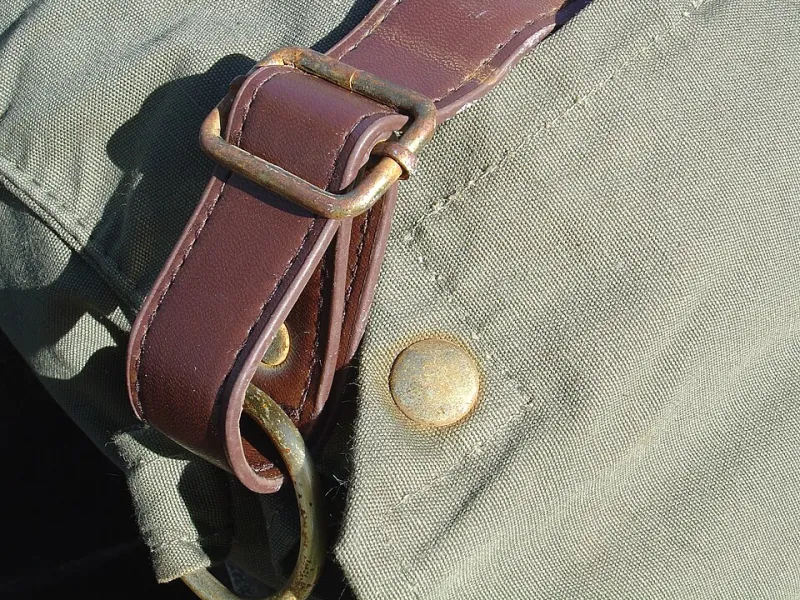
Photo: puuikibeach, CC BY 2.0, via Wikimedia Commons
There is a particular hour on Britain's railways when the truth about luggage is told. Not at the boutique counter, where the lighting is kind and the assistant is gentle, but at 07:42 on a wet Tuesday, when a briefcase is wedged between a folded pushchair and a man reading the racing pages. The train seat, it turns out, is the most honest product tester in the country.
The Commuter as Unwitting Critic
Margaret Ellison has travelled the same route into London for thirty-one years. Her satchel — a bridle leather affair bought in 1994 — has accompanied her through four changes of timetable, two derailments' worth of delays and countless platform scrambles.
"You don't choose how a bag is used," she says. "The railway chooses. It gets shoved under the seat when the rack is full. It gets stood on its end in the vestibule. The strap takes my whole weight when I swing it onto my shoulder at a run."
Her bag bears the evidence. The base is scuffed to a deep, polished brown — the result of a decade of contact with platform edging, carriage floors and the occasional boot. The strap, by contrast, remains supple and unbroken. "That's how I knew it was good," she says. "Not the shine in the shop. The shine went in a fortnight."
Where Bags Fail First
Thomas Renwick, a saddler with three decades at the bench, is unsurprised by the pattern. "The underside of a bag tells you everything," he explains. "Anyone can finish a flap nicely. The question is what happens to the part that faces the world's floors."
He identifies three tell-tale features that separate bags built for British travel from those built for display:
A reinforced base panel. A separate layer of leather — often a heavier cut — stitched across the bottom absorbs the abrasion that would otherwise wear through the body. "On a good bag, the base is sacrificial. It's meant to take the punishment and be replaced, in theory, long after the rest has proven itself."
Brass or steel feet. Modest, sometimes removable, they lift the leather a few millimetres clear of the puddle on the platform or the spill on the carriage floor. "A wet station floor in November is a leather bag's worst colleague."
Strap stitching that runs through, not across. Renwick pulls out a sample from his bench: saddle-stitched straps where the thread passes through the full thickness of the leather, in an overlapping pattern rather than a single row. "A machine can run one line of stitches along the top. That holds until the strap takes a jerk — and every commuter jerks a strap daily. A saddle stitch, done properly, holds even if the thread breaks."
The Damp You Don't Notice
Beyond abrasion, there is the matter of moisture. Platform damp, condensation on carriage windows, the drizzle that never quite justifies an umbrella — all of it finds leather. "Vegetable-tanned hide will drink that damp and, if it's never dried properly, will stiffen at the stress points," Renwick says. "That's why we tell people to let a wet bag rest overnight, stuffed loosely, away from the radiator. The radiator is where good leather goes to become cardboard."
Ellison has her own ritual. "Every few months I take everything out, wipe it with a barely damp cloth, and leave it open overnight on the airing cupboard shelf. My mother did the same with her handbag. It's not sentiment, it's maintenance."
Reading a Bag Before You Buy
For the shopper standing in a shop, the advice is simple: turn the bag over. Examine the base. Ask whether the panel is doubled. Look at the strap where it meets the body — the single most stressed junction on any carried bag. Feel the hardware; solid brass has weight and a dull warmth that plated zinc never quite manages.
And consider the commute itself. A bag that lives in a car and travels to restaurants needs different virtues from one that endures the Northern line. "Buy for the worst day you'll ask of it," Renwick advises, "not the best day you're imagining."
The railway, in its indifferent way, has been conducting this test for over a century. The bags that pass it are not always the most handsome on the shelf. They are the ones whose makers thought carefully about the underside, the strap and the rain — and a good many of those makers, conveniently, are still working within a day's drive of the platforms their bags will frequent.