The Ledger Comes Back: What a Leather House Owes to the People It Sells To
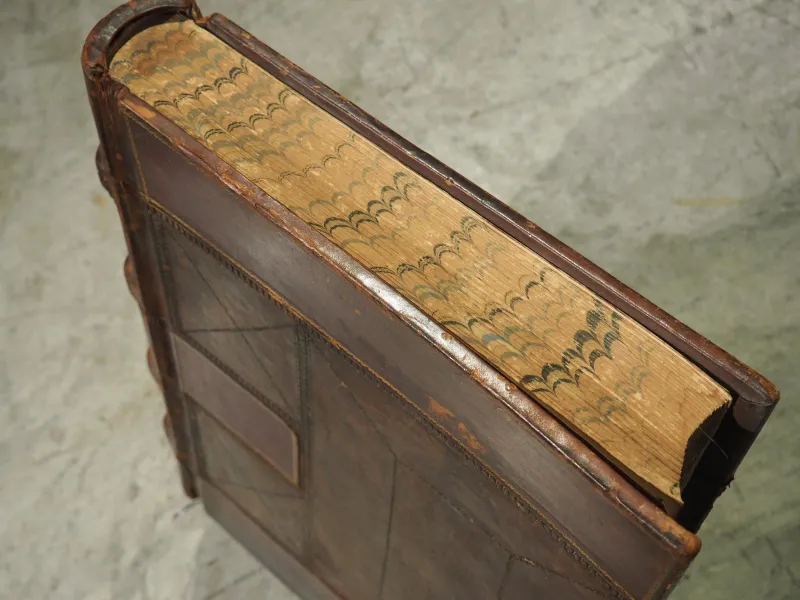
Photo: vintage leather-bound ledger book on wooden shop counter, via a.1stdibscdn.com
In the back room of a tailor's shop in Ludlow, there is a ledger that goes back to 1938. It is not a customer database in any modern sense — no postcodes, no marketing preferences, no consent checkboxes. It is a record of people. Measurements in one column, purchases in another, and in the margins, the sort of detail no algorithm would ever capture: Mrs Hartley, prefers the left pocket deeper — knitting.
That ledger is the argument of this piece. A leather house that keeps notes on its customers is not merely being efficient. It is making a promise.
Memory as a Form of Craftsmanship
We spend a great deal of time on this site discussing the craft that goes into leather — the tanning, the cutting, the saddle stitching. But there is a second craftsmanship, less discussed, that happens across the counter. It is the craft of remembering. A good fitter recalls that your shoulders run broad but your sleeves short. A good repairer remembers that the zip replaced in 2019 was brass because nickel irritated your wrists.
This kind of institutional memory cannot be bought. It can only be kept. And the instrument for keeping it is unfashionably simple: a ledger, or its digital equivalent, maintained by people who intend to be in business long enough for the notes to matter.
Why the Newsletter Cannot Replace It
The modern alternative is the email list. It is, we would suggest, a poor substitute. A newsletter goes out to ten thousand people and addresses none of them. A ledger entry goes to one person and, if written properly, describes them entirely.
There is also a question of intent. A mailing list exists to sell you things. A ledger exists to serve you — to ensure that when your jacket finally needs relining in its fifteenth year, the person taking it in knows what was originally there. The difference is subtle but a quality-conscious shopper will feel it immediately in the shop itself. Ask a salesperson about a jacket you bought four years ago. If they look at you blankly, you have learned something about the house you are dealing with.
What to Expect from a House That Keeps Notes
If a leather shop claims to know its customers, here is a reasonable standard to hold it to. First, it should know what you bought and when — not from a receipt you produce, but from its own records. Second, it should know your measurements, so that a replacement belt or a made-to-order wallet needs no second fitting. Third, it should have a repair history: what was mended, what was replaced, what was advised against.
Fourth — and this is the test that separates the sentimental from the serious — it should use those notes unprompted. We've had your holdall in the ledger since 2016; the handles generally want re-stitching around now. Shall we book it in? That sentence, spoken by a shopkeeper, is worth more than any loyalty scheme ever devised.
A Modest Proposal for Shoppers
We would encourage buyers to demand this of the houses they deal with. Ask whether the shop records repairs. Ask whether your measurements are kept on file. If the answer is a shrug and a reference to the online account portal, consider spending elsewhere.
And for our own part: we keep notes. Not because it is charming, though it is, but because a leather good that lasts forty years deserves a seller who intends to remember it for forty years too. The ledger, like the leather itself, is a commitment made slowly and honoured over time. We think both are due a revival.