The Last Shine Parlour in Town: Why a Generation Forgot How to Look After Leather

Photo by Photo by Jarrod Reed on Unsplash on Unsplash
There is a shoe shine parlour in the North of England — I will not name it, lest the queue grow too long — that has occupied the same narrow unit since 1936. The brass plate above the door has oxidised to a soft grey. Inside, two chairs face a mirror, the leather on their seats worn to a polish by ninety years of gentlemen waiting for their Oxfords to be brought back to life.
The man who runs it now learned the trade from his father, who learned it from his. He is, as far as anyone can establish, the last of his kind within twenty miles. When he retires, the parlour will close, and another small piece of the nation's practical knowledge will go with him.
A High Street That Once Knew Leather
It is worth remembering how common these trades once were. Nearly every market town in Britain supported a cobbler who resoled and repaired, a saddler who could stitch a bridle or a briefcase strap, and often a shine parlour beside the railway station where commuters could have their boots seen to before catching the morning train.
These were not luxuries. They were infrastructure. A good pair of shoes or a leather travelling bag was a significant investment, and the entire retail ecosystem was built around the assumption that you would maintain it. You bought from the shop, the shop knew the cobbler, and the cobbler knew the tannery's leather because he had been working with it for decades.
That ecosystem has largely collapsed. Shoes are cheaper, so we replace them. Bags are lighter, so we discard them. And a whole chain of knowledge — how to clean, feed, polish and preserve — has been severed in a single generation.
The Skills Gap Nobody Talks About
We spend a great deal of time at England Leather arguing that people should buy fewer, better things. But there is an uncomfortable corollary we must now confront: buying better is pointless if you cannot look after what you have bought.
The generation now buying their first serious leather jacket or full-grain holdall was never taught any of this. Their grandparents knew that leather needed feeding after a wet winter. They knew the difference between a scuff that could be polished out and a crack that signalled dried-out hide. This knowledge lived in the household and in the high street simultaneously, and both delivery mechanisms have failed.
The result is predictable. We hear regularly from customers whose jacket could have lasted another twenty years but was ruined by a well-intentioned cleaning product bought from a supermarket — something never designed for hide. We hear of bags stored in plastic boxes in damp garages, emerging two years later with mildew where a tin of conditioner and a cedar hanger would have prevented it.
What the Old Trades Understood
Spend an hour with a working cobbler or saddler and you notice something immediately: they treat leather as a living material, not a finished product. They talk about it the way a gardener talks about soil.
The saddler will tell you that bridle leather must be stuffed with tallow and wax at the bench, and that the owner's job is simply to keep that dressing topped up. The cobbler will explain that a shoe's enemy is not wear but neglect — that a pair resoled twice at the right moments will outlast three pairs bought cheaply. The shine parlour man, when he can be persuaded to talk, will tell you that most of his work is not polishing at all but diagnosis: reading the leather, deciding what it needs, and refusing to hurry.
This is precisely the knowledge that our Leather Care guides try to preserve in written form. But writing can only go so far. Some of it needs to be shown.
Relearning the Upkeep: Five Practical Steps
The good news is that reconnecting with these crafts is easier than finding a shine parlour. Consider the following:
1. Find your nearest repairer before you need one. Search now, while your jacket and bag are in good condition. Ask whether they work on leather garments as well as shoes. A brief visit establishes a relationship you will be grateful for when a zip fails.
2. Attend a demonstration or short course. Several of Britain's remaining saddlery and leatherwork schools run weekend courses open to the public. You will leave knowing how stitching, edging and dressing actually work — and you will never look at a cheap bag the same way again.
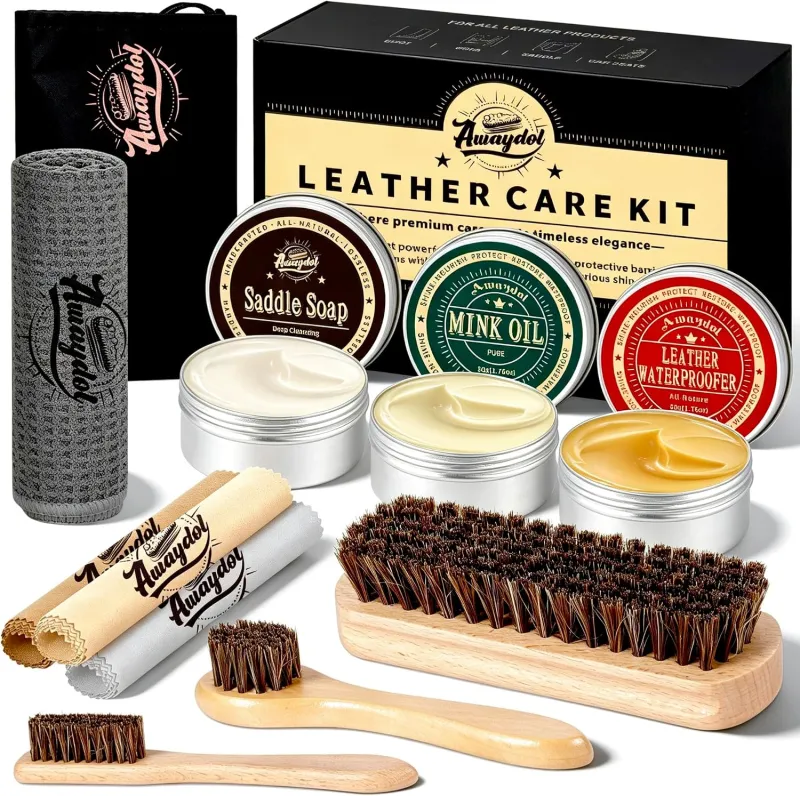
3. Build a small care kit and learn to use it. A horsehair brush, a quality cream or balm, a couple of cloths and a proper hanger will cover ninety per cent of routine maintenance. Fifteen minutes a month is genuinely sufficient.
4. Ask questions when you buy. Any reputable leather house should be able to tell you how to care for the specific hide you are purchasing. If the answer is a shrug, treat that as information about the seller.
5. Repair before you replace. A worn strap, a scuffed toe, a tired lining — these are invitations, not verdicts. The repair economy survives only if we use it.
Keeping the Parlour Open
The shine parlour in the North will not last forever. Its proprietor has no apprentice, and no realistic prospect of finding one. But every customer who walks in, sits in those worn chairs and pays six pounds for a proper polish is casting a small vote for a different kind of relationship with the things we own — one in which leather is maintained, mended and handed on rather than binned.
Buy the good jacket by all means. But the purchase is only the beginning of the arrangement. The rest of the arrangement is a pot of conditioner, a visit to the cobbler, and the patience our grandparents had and we, with a little effort, can recover.