Ten Minutes and a Pot of Tea: The Case for the Monthly Leather Ritual
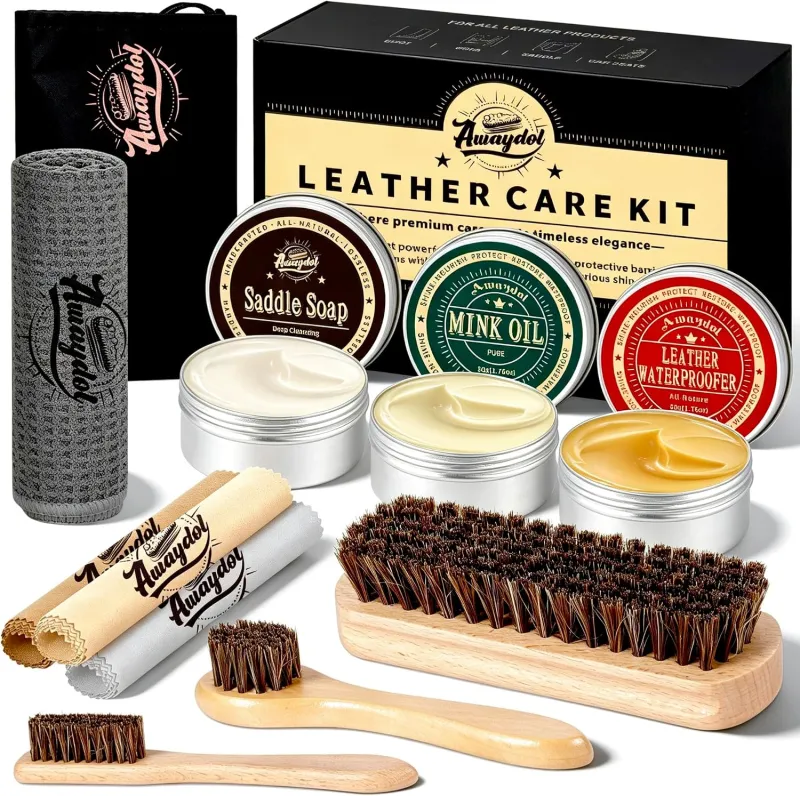
Photo: leather jacket care polishing cloth horsehair brush wooden table, via m.media-amazon.com
There is a particular sort of advertisement that appears every autumn, usually beside a photograph of a man in a flat cap, promising that a single application of some elixir will transform a decade-old jacket into something fit for a country estate. We sell leather goods, and even we find it tiresome.
The honest truth, known to every saddler and cobbler from Northampton to Walsall, is that leather does not want rescuing. It wants company. A well-made jacket or bag asks for ten unhurried minutes a month — no more, no less — and in return it will outlast nearly everything else in your wardrobe. The ritual matters more than the product.
Why Routine Beats Remedies
Most leather damage we see is not the result of neglect in the dramatic sense. It is the accumulation of small oversights: a film of city grime worked into the grain over months, a spill left to dry unattended, a bag hung on a doorknob until the strap loses its shape. None of these is fatal in itself. Together, they are.
A monthly routine catches these things while they are still trivial. Dirt wiped away in October takes thirty seconds; the same dirt buffed into the surface in February may have permanently dulled the finish. Care, like maintenance of a good bicycle or a cast-iron pan, is a habit rather than an event.
There is also a quieter argument. Fast fashion has trained us to believe that possessions are either perfect or finished with — that a scuffed bag is a replaced bag. Ten minutes of attention each month is a small, deliberate refusal of that logic. It is the difference between owning a thing and keeping one.
The Ritual, Step by Step
Make a pot of tea. This is not sentiment; the tea enforces the pace. You cannot rush a ritual you are simultaneously drinking.
1. Empty and look. Turn out every pocket, unzip every compartment. You are not merely tidying — you are inspecting. Corners of bags, cuffs and elbows of jackets, the flex points of shoes: these are where trouble announces itself first. A loose thread noticed now is a five-minute repair; the same thread in spring may be a seam.
2. Wipe, gently. A soft, barely damp cloth passed over the whole surface removes the film of daily life — bus seat grime, kitchen steam, rain residue. Never soak; leather drinks water reluctantly and remembers it unkindly. Let the piece air for twenty minutes afterwards, away from the radiator.
3. Brush. A horsehair brush, worked in short strokes, lifts the nap on suede and raises a quiet lustre on smooth hide. It is the most satisfying and least understood step. Most people who believe their leather needs conditioning actually need only this.
4. Condition — sparingly, and only if needed. If the leather looks dry or feels stiff at the flex points, apply a modest amount of a quality cream with a cloth, working in circles, then leave it overnight. Twice a year is plenty for most pieces. Over-conditioning is the great sin of the over-enthusiastic: it softens structure and darkens grain in ways no maker intended.
5. Store properly. Broad wooden hangers for jackets, never wire. Bags stuffed with tissue or a rolled towel, standing upright, in a cupboard that breathes — never a plastic box in the loft, where damp and heat will do a winter's damage in a summer.
The Arithmetic of Attention
Consider the sums. Ten minutes a month is two hours a year — less time than a single trip to the shops to replace a bag that has been let go. A £40 tin of cream, used sparingly, lasts years. Set against the cost of a properly made British jacket, the maintenance is a rounding error; set against the twenty years of service that jacket might give, it is nothing at all.
There is a phrase that old craftsmen used about tools: a clean tool is a safe tool. Leather is much the same. The piece that is looked at monthly is the piece whose problems are seen early, whose character is understood — where the patina is deepening pleasantly, where a strap is beginning to wear — and whose story you therefore know well enough to tell.
An Antidote, Not a Chore
We would not pretend this ritual is hardship. Done properly, with the tea still warm, it is among the more pleasant ten minutes of a month: a quiet corner, a familiar object in the hands, the particular smell of good hide. Our grandparents took this for granted; the shoeshine, the brush-down of the coat, the Sunday polish were simply what one did.
Recovering that habit costs nothing, requires no miracle product, and asks only that you slow down briefly once a month. Your leather has been patient with you. Ten minutes is a fair reply.