Heft Before Handsome: The Honest Weight of Good Leather
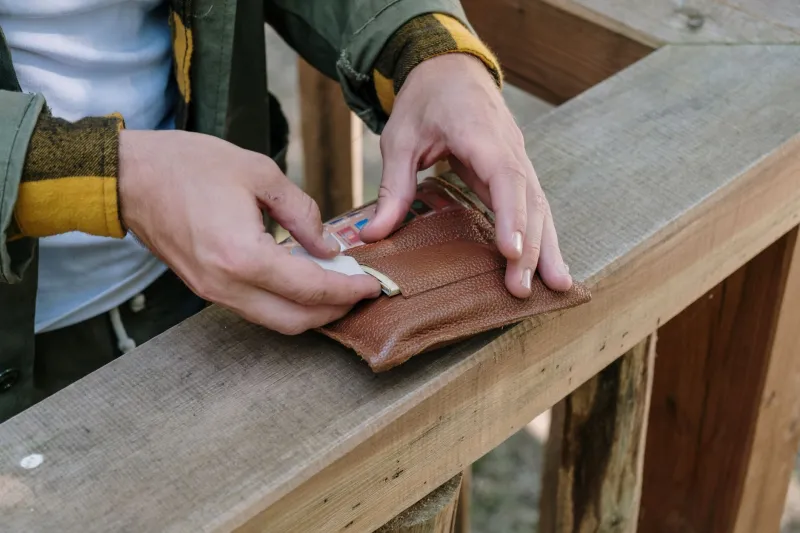
There is a moment in every reputable leather shop, usually just before the customer reaches for the price label, when the assistant watches something more revealing: the hands. A practiced buyer does not look first. They lift. They let the garment or the bag settle into the palm, and they read the answer written in ounces and grams before a single word of marketing has been spoken.
We would go further and say this plainly: weight is the most honest first signal of leather quality available to the shopper today. Not the brand, not the price, and certainly not the swing tag promising 'genuine leather' — a phrase so elastic it has been stretched across everything from full-grain hide to bonded offcuts pressed with glue.
Why Lightness Rarely Tells the Truth
The market has spent two decades teaching us to prize lightness. Ultralight luggage, featherweight jackets, bags that vanish on the shoulder — the language of convenience has crept into a trade where, historically, substance was the whole point. A tanner we spoke to in the Midlands put it bluntly: 'Nobody skins a light hide. Lightness in a finished piece usually means somebody's thinned something out, split it down, or stretched what there was further than it ought to go.'
Splitting is the culprit in most cases. A hide arrives at perhaps five millimetres thick. The tanner can slice it into layers, and the top layer — if it retains its surface — becomes decent leather. But the lower layers, weak and fibrous, get sanded, embossed with an artificial grain, and sold as something they are not. The result is lighter, cheaper, and structurally poorer. It will crease, crack and fatigue years before a proper hide even thinks about it.
What Things Ought to Weigh
Numbers help, so here is a rough guide, gathered from fittings and tannery floors rather than marketing departments.
The jacket. A proper adult leather jacket in cowhide should feel substantial — broadly in the region of 1.5 to 2 kilograms depending on cut and size. A men's biker in heavyweight hide can push towards 2.5 kilograms, and that weight is not a burden; it is the jacket hanging correctly from the shoulders rather than clinging to the chest. If a 'leather' jacket weighs less than a thick cotton sweatshirt, ask what has been removed to make it so.
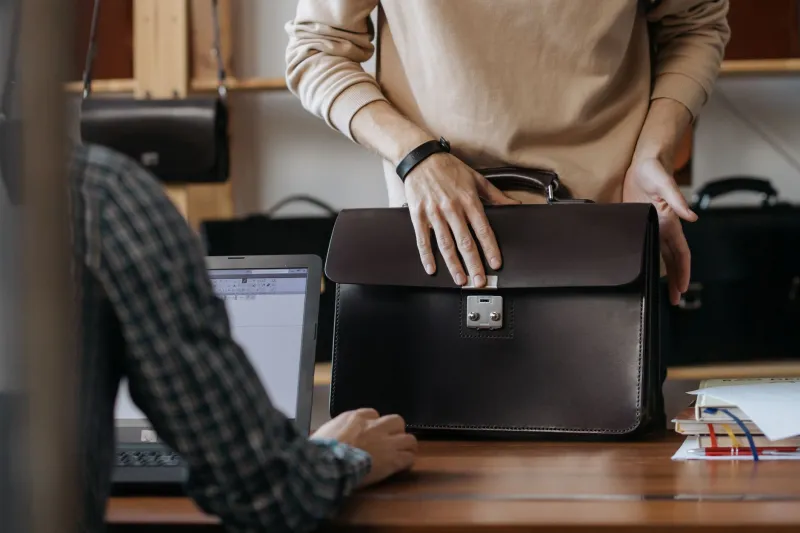
The satchel or briefcase. A well-made bag in vegetable-tanned hide, with solid brass fittings and a decent lining, should carry a heft of 1 to 1.5 kilograms empty. Featherlight bags achieve their lightness through thinner leather, bonded linings and hollow hardware — all of which fail early.
The belt. The humble belt is the easiest test of all. A quality dress belt in full-thickness hide weighs roughly 100 to 150 grams; a casual belt in bridle leather can exceed 200 grams. A belt that weighs less than a first-class stamp's worth of letter is almost certainly a split or a bonded composite, and it will curl at the buckle within two winters.
How to Weigh Without a Scales
Few of us carry scales into a shop, so use the body instead. Hold the jacket by the collar and let it hang from your grip — proper hide pulls downwards with a steady, even tug. Cradle the bag in one hand by the handle and note whether the structure holds its shape or slumps. Roll the belt loosely and feel the resistance; full-grain leather fights back a little, like a stiff card rather than a sheet of paper.
Compare, too. Lift a fast-fashion piece and a heritage piece in the same afternoon and the difference is unmistakable — the way a pint of proper bitter distinguishes itself from lager-and-lime in the first sip.
A Caveat, Fairly Stated
Weight alone is not the whole verdict. Lambskin jackets are legitimately lighter and perfectly respectable for their purpose; a well-engineered bag can shed grams through clever pattern-cutting rather than corner-cutting. Weight is the opening question, not the closing argument. But it is the question a price tag cannot answer and a label cannot embellish.
Our grandparents judged leather the way they judged a houseplant or a joint of beef — by picking it up. It is a habit worth restoring. Next time you are considering a jacket, a bag or a belt, resist the label. Lift first. Let the leather introduce itself before the marketing does.