The Doctor's Bag Knew Its Place: Remembering When Leather Spoke for the Wearer
A Vocabulary in Hide
Stand at the entrance of any large railway station at eight o'clock in the morning and you will see a single bag, repeated a thousand times: the black, zip-closed, nylon-trimmed laptop case. It belongs to nobody and everybody. Fifty years ago, the same platform would have read like a ledger of British working life, and leather was the typeface.
The general practitioner carried a Gladstone — stiff-handled, hinged at the mouth, capacious enough for a stethoscope and a bottle of chloroform in its day. It announced authority before a word was spoken. The solicitor's briefcase, by contrast, was long, flat and severe, built to carry briefs and deeds without a crease. The bank manager's attaché gleamed; it was polished the way his shoes were polished, because the bank's reputation was thought to live partly in its shine.
The Trades That Wore Their Work
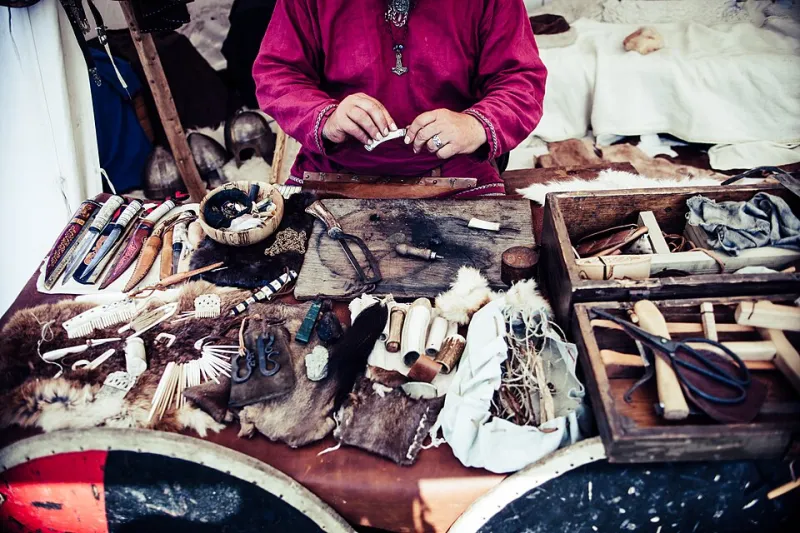
Further down the social ladder, the codes were just as legible. The postman's satchel was a workhorse — heavy bridle leather, a broad shoulder strap, buckles rather than zips, because buckles can be mended by hand at the end of a long round. The huntsman's tall boots carried a polish earned over decades, the leather moulded eventually to one pair of legs alone. The gamekeeper's cartridge bag, the curate's prayer-book case, the commercial traveller's sample case with its hinged trays of cloth swatches — each was a uniform without a badge.
What united them was specificity. These were not accessories chosen from a rail; they were tools issued by, or inherited into, a trade. A bag was made for a purpose, and the purpose showed in every line of the pattern.
What We Lost When Everything Became Interchangeable
The decline was gradual and, on the surface, sensible. Mass manufacturing made one generic bag cheaper than ten specialist ones. Nylon weighed less. A laptop case holds a laptop. Nobody is nostalgic for lugging a six-pound Gladstone up the Northern Line.
But something quieter went with it. When every profession carried the same bag, the bag stopped telling you anything — and, more to the point, stopped telling the wearer anything. A professional object that is chosen deliberately, made properly, and maintained over years does something a disposable one cannot: it anchors a person in their work. There is a reason newly qualified doctors still seek out second-hand instrument bags, and why barristers cling to briefcases old enough to have carried their pupillage papers.
A Quiet Rebellion Worth Making
Reviving profession-conscious leather does not require a costume. It requires asking a better question than 'does this hold my things?' — namely, 'what work am I actually doing, and what would serve it for thirty years?'
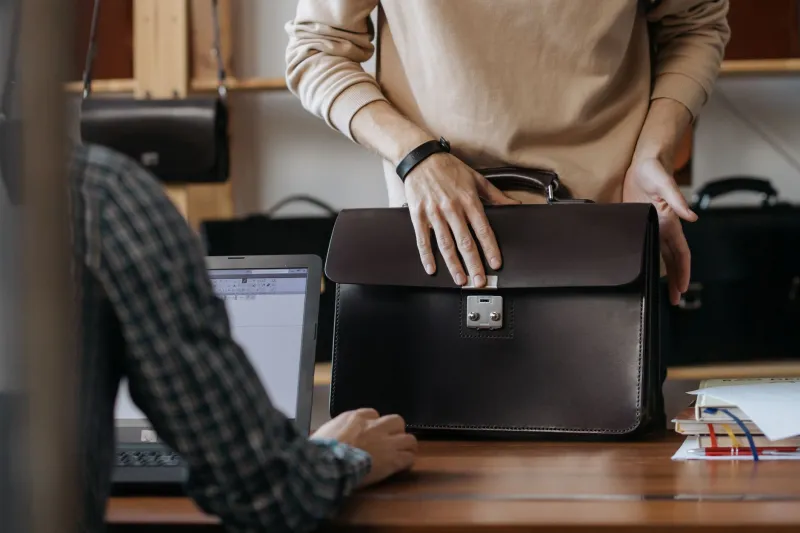
- For those who carry documents and arguments: a slim, unstructured briefcase in vegetable-tanned hide, which will soften and darken into a record of your working life.
- For those who visit, rather than receive, clients: a compact holdall or instrument-style case — the modern GP's bag, repurposed for anyone whose office is other people's front rooms.
- For those on their feet all day: a bridle-leather satchel with solid brass buckles, because the postman's pattern was solved by a century of round-walking, not a marketing meeting.
- For those who dress for the boardroom: a proper attaché, polished occasionally and without irony.
The point is not nostalgia for its own sake. It is that a bag built for a specific working tradition carries the accumulated judgement of generations who did that job — the right depth, the right strap, the right closure. Generic design cannot borrow that intelligence.
Chosen, Not Issued
None of us is issued a leather briefcase by our profession any more. That is, in one sense, a freedom our grandparents never had: we choose. But a choice only means something when it is informed. The bank manager did not choose his attaché; the bank more or less chose it for him. We must choose better, because nobody will choose for us.
So look at what you carry into work tomorrow. If it is a black rectangle indistinguishable from a thousand others on the 7.42, consider whether it says anything about the work you do — or whether it is time to let leather speak for you again, as it once did for the doctor, the postman and the man behind the bank counter.