The Sixty-Second Inspection: How to Spot a Cheap Leather Jacket Before You Pay
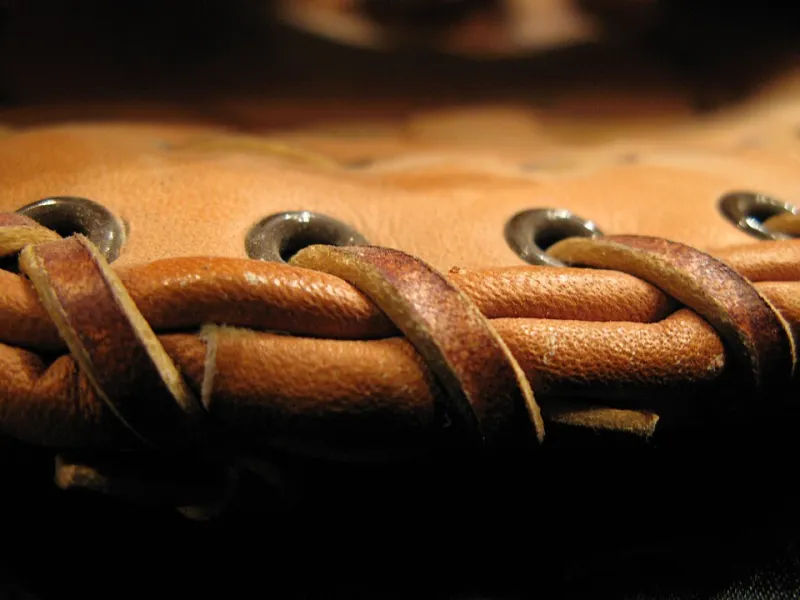
Photo: Kevin Dooley from Chander, AZ, USA, CC BY 2.0, via Wikimedia Commons
The high street presents a curious problem. Stand before a rail of leather jackets — in a department store, a designer outlet, or an online showroom — and the differences between a £180 jacket and an £800 one are surprisingly difficult to see. Both are brown. Both have collars and cuffs. Under shop lighting, both may look perfectly respectable.
Yet the difference is there, and it is written in the details that most shoppers never examine. The leather itself, in fact, is often the last place to look. Start instead with everything that surrounds it.
Start With the Zipper
Turn the zip pull over and read it. Reputable jacket makers almost always use branded hardware — YKK, Riri, Lampo — and the brand name is stamped on the reverse of the pull or the slider. An unmarked zip is not automatically a failure, but it is a signal. A maker who economises on the component you touch fifty times a day has economised elsewhere too.
Test the slider while you are at it. It should run smoothly the full length of the tape without catching, and the teeth should mesh cleanly. On a jacket you hope to own for decades, the zip is the part most likely to need replacing — and a quality zip postpones that day by many years.
Judge the Lining
Open the jacket fully and run a hand across the lining. In a quality garment you will typically find cupro or a dense cotton blend — fabrics that breathe and slide smoothly over shirt sleeves. A shiny, whisper-thin polyester that crackles underfoot of a fingertip is the economy choice, and it will snag and split long before the leather shows its age.
Check the seams where lining meets leather. Are they finished, bound, or at least neatly stitched? A raw, puckered junction is the work of a factory optimising for seconds per garment rather than years per garment.
Count the Stitches
You need not bring a loupe. Simply look at the seam running down the sleeve and estimate stitches per inch. Fine, dense stitching — roughly eight or more per inch — indicates proper machine setup and thread tension. Long, sparse stitches are faster to sew and cheaper to produce, and they fail sooner.
Then pull gently, very gently, at a seam. Quality construction holds firm; there should be no gap between panels and no thread ends left proud.
Read the Edges
The edges — at the cuffs, the hem, the collar — are where cheap construction is exposed. On a good jacket, edges are skived, folded, or dressed and burnished so they sit flat and sealed. On a poor one, you will see raw cut leather, paint-like edge coating that is already cracking, or edges that have simply been left to fray.
And Finally, the Leather
Only now turn to the hide itself. Press it lightly: quality leather springs back, while heavily corrected or bonded material can feel papery and dead. Look at the grain — natural variation, even insect marks, are the signature of a full-grain hide, whereas a suspiciously uniform surface suggests heavy correction. Give it a sniff if you are brave; chemical sharpness suggests heavy finishing.
The Checklist, Summarised
Branded, smooth-running zip. Lining that breathes and is properly finished. Dense, even stitching. Edges that are sealed and flat. Leather that springs back and shows honest grain. Sixty seconds, no expertise required.
One final thought: a jacket that passes this inspection is also a jacket worth caring for. Quality construction rewards maintenance — a conditioned hide, a lubricated zip, a lining repaired the moment it tears — and punishes neglect. Buy well once, inspect honestly, and the garment will still be doing its job when the fashion has turned over several times. That, ultimately, is the entire argument for paying attention in the fitting room.